1. STORIES TOLD THROUGH CLAY
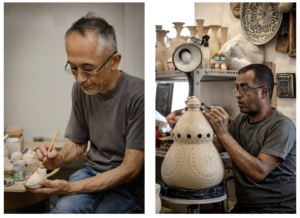
A Japanese artisan carefully paints an incense burner for a tea ceremony while a Bahraini artisan carves patterns into a handcrafted clay vase. Their fully absorbed expressions reveal a shared dedication to material, rhythm, and tradition.
日本の職人は茶道に使う香炉に丁寧に絵付けをし、バーレーンの職人は粘土の花瓶に繊細な模様を彫り込んでいる。
その没頭した表情からは、素材への敬意、作業のリズム、そして伝統への深い思いが共通して感じられる。
2. FABRIC OF CULTURE
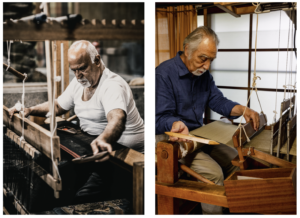
A Bahraini artisan weaves bold geometric designs using primarily cotton, while a Japanese artisan works with silk to create subtle and elegant motifs. Their focused attention to thread and texture highlights a shared passion for craftsmanship and cultural storytelling.
バーレーンの職人は主に綿を使い、大胆な幾何学模様を織り上げる。
一方、日本の職人は絹を用い、繊細で優雅な文様を生み出していく。
糸や質感に向けられた集中した眼差しからは、ものづくりへの情熱と文化を語り継ぐ思いが共鳴している。
3. TEA TIME TRADITIONS
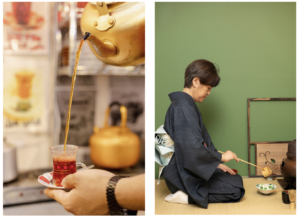
A Japanese tea master prepares matcha with mindful precision, while a Bahraini cafe staff serves tea in a gesture of hospitality. In both cultures, these rituals unfold in spaces designed for sharing—not just tea, but connection and presence. Each pour invites harmony and gentle togetherness.
日本の茶道家は、ひとつひとつの所作に心を込めて抹茶を点てる。
一方、バーレーンのカフェスタッフは、茶をふるまうことで温かなもてなしを示す。
どちらの文化においても、その儀式は「茶」そのものだけでなく、つながりや今この瞬間を分かち合うためにある。
一服のお茶に込められたのは、調和とやさしい寄り添いの心だ。
4. BRIDES ACROSS CULTURES
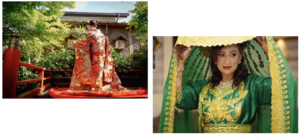
A Bahraini bride wears a vivid green thoub al‑nashl—signifying prosperity and harmony in Islamic culture—while a Japanese bride wears a bright red iro‑uchikake, chosen for its symbolism of joy and good fortune. Both ensembles shine with bold, celebratory colors and rich detail, reflecting cultural identity and beauty.
バーレーンの花嫁は、繁栄と調和を象徴する鮮やかな緑の「トゥーブ・アンナシュル」を纏い、
日本の花嫁は、喜びと吉兆を意味する真紅の「色打掛」を身にまとう。
どちらの装いも、祝福の色彩と精緻な意匠に彩られ、文化の美と誇りを映し出している。
5. CHILDHOOD CEREMONIES
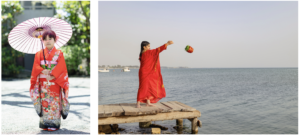
Children in Bahrain participate in the Heyya Beyya tradition—tossing potted green plants into the sea as a symbolic offering for the safety of pilgrims—while in Japan, Children celebrate Shichi‑Go‑San at ages 3,5 (boys), and 3,7 (girls), marking key milestones in healthy growth and well‑being.
バーレーンの子どもたちは「ヘイヤ・ベイヤ」の伝統行事に参加し、
巡礼者の安全を祈って鉢植えの緑を海へと投げ入れる。
一方、日本の子どもたちは三歳・五歳(男児)、三歳・七歳(女児)で「七五三」を祝い、
健やかな成長と幸せを願う節目を迎える。

○Photographer’s Bio
Emiko Hashimoto is a Japanese photographer currently based in Bahrain.
Her work centers on human connection, identity, and the quiet power of presence through portraiture, while also embracing a documentary approach that highlights cultural traditions and everyday life.
She has completed three large-scale portrait projects in Japan and is now expanding her vision internationally—focusing especially on the cultural parallels and bridges between Bahrain and Japan.
橋本 永美子は、現在バーレーンを拠点に活動する日本人写真家です。
彼女の作品は、ポートレートを通じて「人と人とのつながり」「アイデンティティ」「静かな存在感の力」を探求しながら、文化的伝統や日常生活を映し出すドキュメンタリー的視点も取り入れています。
日本では3つの大規模なポートレートプロジェクトを完成させており、現在は活動の場を国際的に広げ、特にバーレーンと日本の文化的な共通点や架け橋に焦点を当てています。